
The rapid increase in urban populations has turned parking into a critical pain point. Traditional manual management relies on human attendants and static ticketing. Consequently, this outdated approach leads to traffic congestion, environmental pollution, and wasted time.
Modern Smart Parking solutions use the Internet of Things (IoT) to provide an intelligent path forward. Indeed, these systems optimize space utilization, enhance security, and streamline the entire experience from discovery to payment.
The Core Concept: Intelligent Parking Management
A smart parking system is much more than a simple automated gate. Instead, it represents a holistic integration of hardware and software designed to streamline urban mobility.
- Real-time Occupancy: Sensors continuously monitor available spaces and update drivers instantly.
- Enhanced Security: Automated systems track vehicles during entry, parking, and exit.
- Operational Savings: Automated workflows reduce human intervention and lower maintenance costs.
- Frictionless Payment: Digital gateways process payments automatically without physical cash.
Depending on site requirements, operators can scale intelligence from simple RFID tags to complex sensor networks.
Tailored Solutions for Diverse Environments
1. Residential Buildings
Residential properties primarily serve permanent tenants with assigned spaces. Therefore, the primary objective focuses on security and frictionless access.
- Core Components: Long-range RFID antennas, vehicle tags, and automatic barriers enable seamless entry.
- Advanced Layer: License Plate Recognition (LPR) cameras integrate with gate controllers to deliver total access automation.
2. Commercial and Administrative Complexes
Commercial facilities experience high traffic turnover. As a result, they require efficient spatial guidance and flexible revenue generation.
- Parking Management System (PMS): Delivers end-to-end automation from initial entry to final exit.
- Parking Guidance System (PGS): Dynamic digital signage uses occupancy sensors to direct drivers toward the nearest empty bay quickly.
- Automated Payments: Self-service kiosks and exit-barrier payment stations handle high-volume transactions securely.
3. Modern Facilities & IoT Platforms
High-end commercial infrastructure integrates parking directly into the building’s broader IoT network. Advanced IoT platforms provide interconnected ecosystem components:
- Central Data Platform: The core software aggregates sensor data, validates access rights, and triggers automated security alerts.
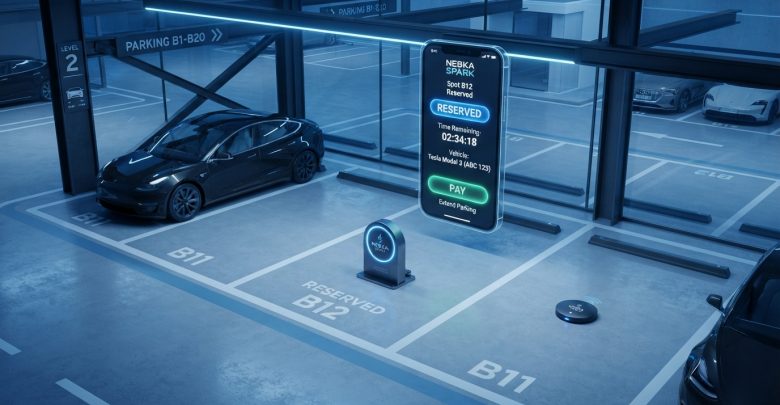
- Smart Parking Locks: Wireless barriers installed in individual bays prevent unauthorized parking. Users can operate these locks remotely via mobile apps.
- Wireless Occupancy Sensors: Surface-mounted sensors detect vehicle presence. Furthermore, they provide visual LED indicators for reserved or handicap bays.
- Communication Gateways: Robust gateways utilize Wi-Fi or LoRaWAN protocols to ensure reliable data transfer between hardware nodes and the cloud.
Comprehensive Control Interfaces
Modern IoT parking architectures provide dedicated interfaces for every user level:
- User Mobile App: Drivers search for real-time parking, reserve spots, control bay locks, and process digital payments.
- Attendant Mobile App: Facility staff monitor lock battery levels, track operational errors, and manage temporary user permissions.
- Admin Control Panel: Management teams access detailed financial reports, analyze peak occupancy heatmaps, and optimize pricing strategies.
Conclusion
The transition toward IoT-enabled Smart Parking represents a vital necessity for modern smart cities. By combining advanced sensors, automated payments, and data analytics, urban centers can eliminate traffic friction, reduce carbon emissions, and deliver a seamless driving experience.