
OT vs IT is the tension every IIoT project eventually runs into, even if nobody names it directly at first. The people who run the factory floor and the people who run the network don’t always speak the same language, share the same priorities, or trust the same tools. Understanding this divide is essential context for anyone working on industrial IoT projects, not just a background curiosity.
This guide breaks down what OT and IT actually are, why they developed so differently, and why bridging them properly determines whether an IIoT project actually succeeds.
What Is OT (Operational Technology)?
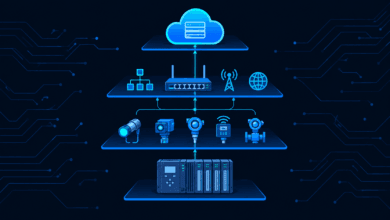
Operational Technology refers to the hardware and software systems that directly monitor and control physical devices, processes, and industrial equipment. This includes PLCs, SCADA systems, DCS, industrial robotics, and safety systems on a production line — the systems covered in more depth in our industrial automation and PLC guide.
What Is IT (Information Technology)?
Information Technology refers to the conventional computing and networking infrastructure most organizations rely on for data processing, storage, and communication — servers, databases, corporate networks, email systems, and business applications like ERP and CRM platforms. IT exists to manage information, not to directly control physical machinery.
Why OT and IT Developed So Differently
The OT vs IT divide didn’t emerge by accident — each side grew to serve fundamentally different priorities.
Priority: Safety and Uptime vs Data Security and Flexibility
OT systems exist to keep physical processes running safely and continuously. A chemical plant’s control system failing isn’t just an inconvenience — it can mean a safety incident. As a result, OT prioritizes stability and predictability above almost everything else.
IT systems, by contrast, prioritize protecting data, enabling flexible access, and supporting rapid iteration. Regular updates and architectural changes are normal in IT — the opposite of OT’s “don’t touch what’s working” instinct.
Timing: Deterministic Real-Time vs Tolerant of Latency
OT systems often require deterministic, real-time responses — a safety interlock needs to trigger within a guaranteed time window, every time. IT systems generally tolerate small delays without catastrophic consequences.
Lifecycle: Decades vs Years
A PLC might run unchanged for 15-20 years, often on hardware and software that predates modern cybersecurity practices entirely. IT infrastructure typically refreshes on a much faster cycle, making long-lived OT systems look almost foreign from an IT perspective.
Security Mindset: Historically Isolated vs Built for Networked Threats
OT security historically assumed physical isolation. IT developed under constant exposure to networked threats, building security into its DNA much earlier. As IIoT connects previously isolated OT systems to broader networks and the cloud, this historical assumption becomes a genuine liability.
Where the OT vs IT Divide Creates Real Problems
Communication and Trust Gaps
OT engineers and IT teams often use different terminology and prioritize different metrics. An IT team proposing a routine security patch might not realize it could require taking a production line offline.
Cybersecurity Exposure
As IIoT connects OT systems to IT networks and the cloud, previously isolated equipment becomes reachable from the broader network — and potentially by attackers.
Mismatched Change Management Expectations
IT teams often expect to patch systems on a regular cadence. OT teams often can’t accommodate that cadence without risking production downtime.
Data Ownership and Access Questions
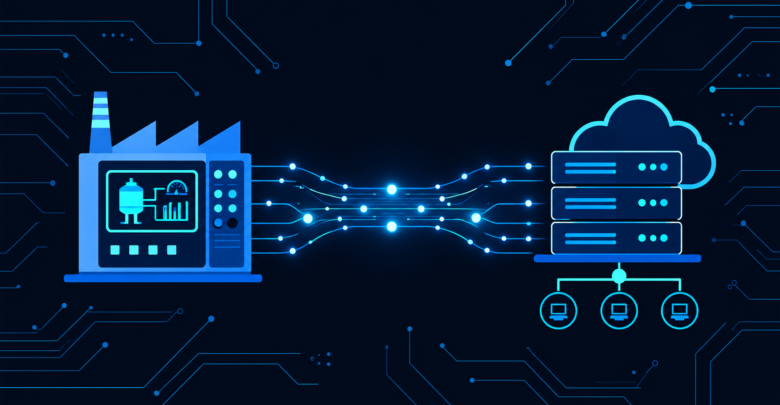
IIoT projects often require OT data to flow into IT-managed analytics platforms. Deciding who owns and accesses that data requires genuine collaboration between teams that may never have worked together closely before.
How Organizations Bridge the OT/IT Gap
Dedicated OT/IT Convergence Teams
Some organizations create cross-functional teams specifically responsible for bridging OT and IT.
Standards Like OPC UA
Technical standards such as OPC UA provide a common, secure communication layer specifically designed to let OT and IT systems exchange data without forcing either side to abandon its core requirements.
Network Segmentation
Many organizations implement careful segmentation — allowing necessary data flow while maintaining strong boundaries that prevent an incident on one side from directly reaching the other.
Phased, Pilot-Based Rollouts
Successful IIoT initiatives often start with narrow, low-risk pilot projects rather than attempting a sweeping, organization-wide integration from the outset.
Why This Matters for Anyone Working on IIoT
A technically excellent IIoT platform that ignores OT’s safety and uptime priorities, or that IT can’t secure properly, is likely to stall regardless of how sophisticated its analytics might be. The organizations that get this right treat OT/IT convergence as a genuine organizational and cultural challenge, not just a technical integration problem.
Conclusion
OT and IT grew up solving fundamentally different problems, under fundamentally different constraints, and that history doesn’t disappear just because IIoT now asks them to work together. Recognizing why each side prioritizes what it does is the foundation for building industrial IoT systems that respect both worlds’ legitimate concerns. Getting OT vs IT right is less about picking a winner and more about building a bridge both sides can trust.
For a deeper look at the systems on the OT side of this divide, our guide on Industrial Automation and PLC covers the full ecosystem that IIoT ultimately needs to connect to.