
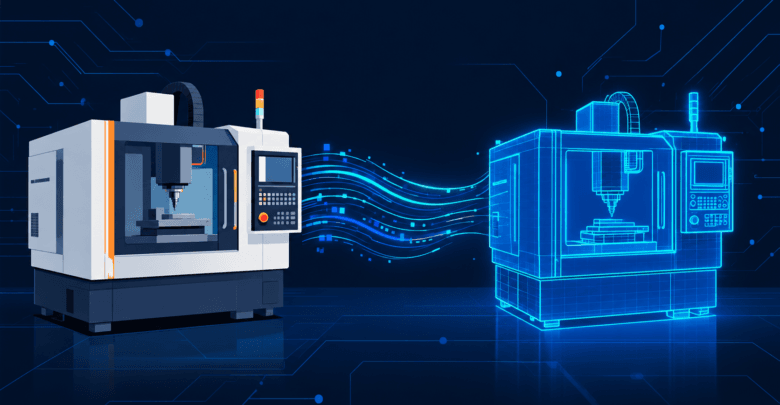
A digital twin is one of those concepts that sounds abstract until you see it in action. It’s a virtual replica of a physical object, process, or system. This replica gets continuously updated with real-world data, so it mirrors its physical counterpart’s actual behavior — not just its design specifications. What started as a niche concept in aerospace engineering has grown into one of the most widely adopted applications of IoT. Today, it spans manufacturing, healthcare, urban planning, and beyond.
This guide covers what digital twins actually are, how they work, where they’re used, and the practical challenges of building one.
What Is a Digital Twin?
A digital twin is a dynamic, data-driven virtual model of a physical asset, process, or system. The key word is “dynamic.” Unlike a static 3D model or blueprint, a digital twin continuously receives real-time data from sensors on its physical counterpart. This keeps it updated to reflect the actual current state and behavior of the real-world object.
This distinction matters enormously. A blueprint tells you how a machine was designed. In contrast, a digital twin tells you how that specific machine is actually performing right now. It relies on real sensor data, not assumptions. As a result, you can simulate, predict, and analyze based on reality.
The Three Core Components of a Digital Twin
The Physical Entity
This is the real-world object, process, or system being modeled. It might be a jet engine, a manufacturing production line, an entire building, or even a city’s traffic network. This entity carries IoT sensors. These sensors continuously capture relevant data about its condition and behavior.
The Virtual Model
This is a digital representation of the physical entity. It can range from a simple data model to a fully detailed 3D simulation. The model incorporates the physical entity’s design specifications and historical behavior. It also includes the physics or logic governing how the entity should behave under different conditions.
The Data Connection
This is the continuous flow of data between the physical entity and its virtual model. Sensor readings flow from the physical world into the digital model. In more advanced implementations, control signals or recommendations flow back the other way. In turn, this influences the physical entity’s operation — a bidirectional relationship sometimes called a “digital thread.”
How Digital Twins Actually Work
Data Collection
IoT sensors on the physical entity continuously capture relevant metrics. Temperature, pressure, vibration, position, and usage patterns are common examples. Which metrics matter depends on what aspect of the entity’s behavior the twin needs to track.
Data Integration and Processing
This sensor data flows into a platform that integrates it with the virtual model. Often, this platform combines real-time sensor readings with historical data and design specifications. Sometimes it also draws on data from similar assets, building a more complete and accurate picture.
Simulation and Analysis
With the virtual model kept current by real data, engineers and analysts can run simulations against it. For example, they might test “what if” scenarios. Or they might predict how the physical entity will behave under new conditions. They can also identify patterns that precede failure — all without touching or risking the actual physical asset.
Feedback and Optimization
In more mature implementations, insights generated from the digital twin feed back into the physical entity’s operation. As a result, teams can adjust equipment settings, trigger maintenance, or inform operational decisions based on what the simulation reveals.
Types of Digital Twins
Component Twins
The most granular level involves a digital twin of a single component, like a specific bearing or sensor. This tracks that individual part’s condition and remaining useful life.
Asset Twins
An asset twin models a complete piece of equipment made up of multiple components. Think of an entire jet engine, a wind turbine, or a manufacturing robot. It captures how all its components interact and affect overall performance.
System or Process Twins
These twins represent an entire system made up of multiple interacting assets. Examples include a full production line, a building’s HVAC system, or a supply chain network. In turn, they provide visibility into how different parts of the system affect each other.
City or Environment Twins
At the broadest scale, digital twins model entire cities, transportation networks, or environmental systems. These twins integrate data from countless sensors across a large geographic area. This lets them model traffic flow, energy usage, or environmental conditions at scale.
Real-World Applications
Manufacturing and Industrial Equipment
Digital twins of production equipment let manufacturers simulate changes to a production line before implementing them physically. They also predict equipment failures before those failures cause costly downtime. In addition, they optimize production parameters based on real performance data rather than theoretical specifications. This overlaps significantly with the predictive maintenance concepts covered in our IoT aircraft maintenance guide, where similar principles apply to aviation-specific equipment.
Healthcare
Emerging applications include digital twins of individual patients. These get built from medical imaging, genetic data, and continuous health monitoring. As a result, clinicians can simulate how a specific patient might respond to a treatment before administering it. This remains an area of active research with significant long-term potential, though still maturing compared to industrial applications.
Smart Buildings and Cities
Digital twins of buildings model energy usage, occupancy patterns, and structural conditions, enabling more efficient facility management. At a larger scale, city-wide digital twins integrate traffic, utility, and environmental data. This helps urban planners simulate the impact of infrastructure changes before committing to them.
Product Design and Development
Digital twins allow engineers to simulate how a product design will perform under real-world conditions throughout its lifecycle. This catches design flaws earlier. It also reduces the need for expensive physical prototypes at every design iteration.
Supply Chain and Logistics
Digital twins of supply chain networks model how disruptions at any single point ripple through the broader system. A supplier delay or a transportation bottleneck are common examples. As a result, organizations can plan contingencies and identify vulnerabilities before they cause real disruptions.
Digital Twins vs Related Concepts
Digital Twin vs Simulation
A traditional simulation models a system based on theoretical parameters. It typically runs as a one-time or periodic exercise. By contrast, a digital twin is continuously updated with real data from its physical counterpart. This makes it a living model rather than a static one-off simulation.
Digital Twin vs 3D Model
A 3D model is a visual or geometric representation, often static and disconnected from real-world data. A digital twin may include a 3D visual component too. However, its defining characteristic is the live data connection to a physical counterpart, not the visual fidelity of its representation.
Digital Twin vs IoT Dashboard
A typical IoT dashboard displays current sensor readings. However, a digital twin goes further. It incorporates a model that can simulate, predict, and analyze based on that data, rather than simply visualizing it.
Challenges in Building Digital Twins
Data Quality and Integration
A digital twin is only as accurate as the data feeding it. Inconsistent sensor calibration, gaps in data collection, or poorly integrated data from multiple sources can all undermine the twin’s accuracy. This can lead to simulations and predictions that don’t reflect reality.
Model Complexity and Maintenance
Building an accurate virtual model requires significant engineering effort and deep domain expertise, especially for complex physical systems. Additionally, the physical entity changes over time through wear, modification, or repair. Therefore, the model needs ongoing maintenance to stay accurate — a digital twin isn’t a build-once project.
Computational Resources
Detailed simulations can require substantial computational resources, particularly for complex systems modeled at high fidelity. This becomes especially demanding for real-time analysis at scale across many twins simultaneously.
Interoperability Across Vendors
Digital twin platforms often integrate with IoT sensors, equipment, and software from different vendors. These vendors frequently use different data standards. Consequently, full interoperability remains a genuine ongoing challenge rather than something solved by any single platform.
Security and Data Privacy
A digital twin often contains detailed, sensitive information about a physical asset’s operation. In cases involving personal or medical data, such as in healthcare digital twins, privacy considerations add another layer of complexity. This affects how the twin’s data gets stored, accessed, and protected.
Getting Started with Digital Twin Concepts
Organizations exploring digital twin technology typically start narrow. Rather than attempting a broad, system-wide twin from the outset, they begin with a component or single-asset twin. This twin ties to a clear, specific use case, like predictive maintenance on one type of equipment. As a result, teams can validate the data pipeline, model accuracy, and business value on a manageable scale first. Only then do they expand to more complex system or process-level twins.
Conclusion
Digital twins represent one of the more sophisticated applications of IoT technology. They move beyond simple sensor monitoring into genuine predictive and simulation capability grounded in real-world data. The concept spans an enormous range of scale, from a single component to an entire city. Its value grows as the underlying data quality and model accuracy improve. For organizations considering the technology, starting with a focused, well-defined use case remains the most practical path forward. This way, you avoid getting lost in the complexity of a fully integrated, system-wide implementation.
For a closer look at how similar sensor-driven, predictive principles apply in a specific industry, our guide on IoT in Aircraft Maintenance covers predictive maintenance concepts that overlap closely with asset-level digital twin applications.