
The Industrial Internet of Things (IIoT) serves as the core foundation of Industry 4.0, transforming traditional manufacturing plants into connected smart factories. By integrating smart sensors, cloud analytics, and edge gateways, enterprise manufacturers achieve unprecedented operational visibility.
Consequently, IIoT architectures optimize production workflows, prevent unexpected downtime, and secure the modern smart factory floor.
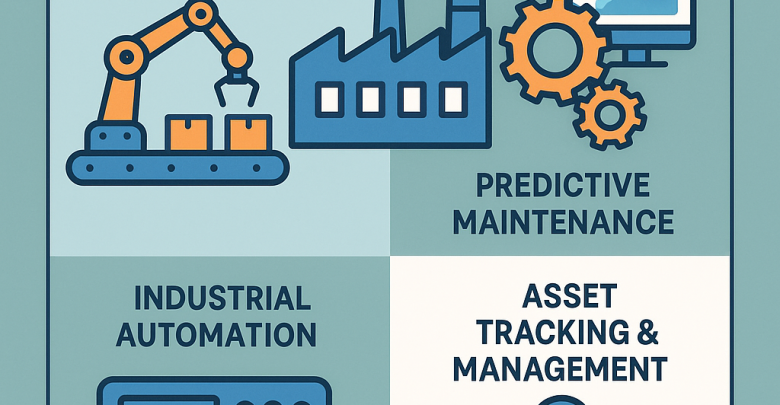
4 Key Core Applications of Industrial IoT
1. Smart Manufacturing Ecosystems
IIoT establishes a unified ecosystem where production machinery, enterprise software systems, and floor workers interact intelligently. Continuous real-time data collection paired with Artificial Intelligence (AI) analytics allows plant managers to optimize production lines dynamically, eliminate systemic waste, and pivot operations rapidly to meet fluctuating market demands.
2. Data-Driven Predictive Maintenance
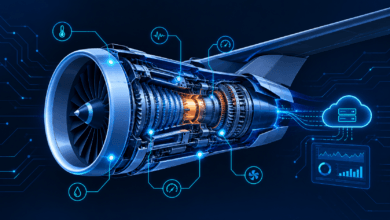
Traditional reactive maintenance models give way to proactive, sensor-driven frameworks. High-sensitivity IIoT sensors continuously track machinery health metrics, such as vibration frequencies, temperature anomalies, and acoustic signatures. Advanced predictive algorithms analyze these data streams to forecast structural wear and potential equipment failures long before they occur, drastically reducing unplanned downtime and cutting operational repair costs.
3. High-Precision Industrial Automation
IIoT acts as the underlying backbone for next-generation industrial automation. By establishing low-latency communication loops between complex assets—ranging from robotic assembly arms to automated conveyor systems—IIoT enables machines to coordinate intricate tasks with minimal human intervention. This continuous synchronization maximizes throughput speed, optimizes precision, and removes human operators from high-hazard operational zones.
4. Real-Time Asset Tracking & Supply Chain Visibility
Within large-scale manufacturing facilities and distributed supply chains, IIoT platforms convert passive inventory into visible, active data points. Affixed tracking nodes provide enterprise resource planning (ERP) systems with real-time visibility into the exact location, deployment patterns, and environmental conditions of machinery, specialized tooling, and raw materials. This transparency streamlines internal logistics and eliminates resource misallocation.
Technical Summary of Industrial IoT Applications
The following table summarizes the key IIoT application verticals and their enterprise impact:
| IIoT Application Area | Key Enabling Technology | Primary Operational Benefit |
|---|---|---|
| Smart Manufacturing | AI Telemetry Analytics & Edge Computing | Eliminates operational waste and balances lines |
| Predictive Maintenance | Vibration & Thermal Sensors + ML Models | Prevents unplanned machine downtime |
| Industrial Automation | Low-Latency Fieldbus & Robotics Control | Maximizes throughput speed and precision |
| Asset Tracking | ERP Integration & Connected Tracking Nodes | Provides full visibility across internal logistics |
Concrete Enterprise Benefits of IIoT
Embracing a comprehensive IIoT architecture yields distinct structural advantages for competitive manufacturing operations:
- Optimized Resource Efficiency: Continuous workflow transparency allows engineers to pinpoint operational bottlenecks, eliminate idle machinery states, and significantly lower factory energy consumption.
- Substantial Cost Mitigation: Shifting to predictive maintenance timelines reduces the need for expensive emergency parts shipments and minimizes capital expenditure on premature machine replacements.
- Elevated Production Output: The integration of autonomous machinery control loops and real-time analytics scales production capability without compromising product quality or consistency.
- Proactive Workforce Safety: Continuous environmental monitoring and machine performance tracking alert safety teams to hazardous gas buildups, thermal spikes, or equipment instabilities before workplace accidents transpire.
Conclusion
Industrial IoT represents the baseline infrastructure of modern industrial evolution. As manufacturing enterprises continue to deeply embed IIoT architectures across their operational frameworks, the future of global production shifts toward a highly resilient paradigm that is fundamentally faster, smarter, and environmentally sustainable.
Tags:
Industrial IoT | IIoT Manufacturing | Smart Factory | Predictive Maintenance | Industrial Automation | Asset Tracking | Edge Analytics | Workflow Optimization | Operational Efficiency