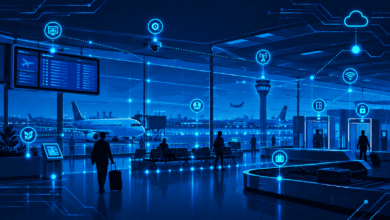
The integration of the Industrial Internet of Things (IIoT) into modern logistics is not merely an operational upgrade. Instead, it represents a strategic necessity. By evolving away from legacy systems like manual scanners, the logistics industry is redefining efficiency, security, and global resource management.
1. The Evolution of Logistics Infrastructure
Historically, logistics relied on manual interventions and siloed data collection. Drawing parallels from the factory floor, modern logistics leverages existing data infrastructures to transition into IIoT seamlessly.
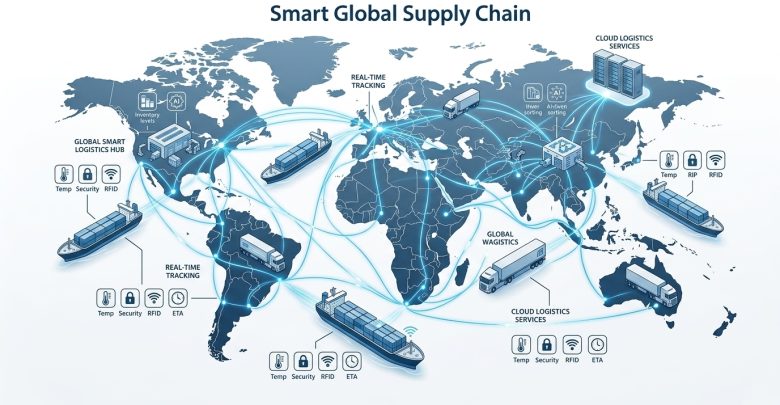
Consequently, this shift enables real-time monitoring across warehousing networks and transportation fleets.
2. Enhancing Security and Asset Accountability
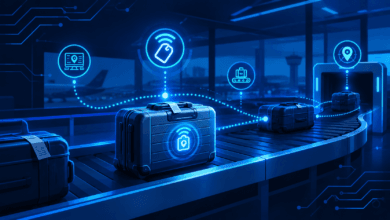
Cargo theft remains a multi-billion dollar challenge globally. Fortunately, IIoT provides a robust defense mechanism by enabling advanced tracking features:
- Real-Time Visibility: Fleets receive continuous location updates regardless of asset position.
- Item-Level Monitoring: Systems track individual items rather than simple outer containers. Consequently, this granular visibility reduces insurance disputes and minimizes financial losses.
3. Intelligent Warehousing and Automated Quality Control
The adoption of low-cost RFID and wireless readers has revolutionized warehouse management.
- Dynamic Inventory Control: Systems monitor stock levels in real time. Therefore, managers prevent budget overruns caused by sudden stockouts or overstocking.
- Automated Quality Assurance: Environmental IoT sensors continuously monitor critical variables like temperature and humidity. Furthermore, immediate alerts trigger when conditions approach safety thresholds, ensuring product integrity for perishable goods.
4. The Global Impact: Solving Food Insecurity
While global agriculture focuses on increasing crop output, efficient distribution remains the missing link. IIoT serves as the key catalyst for closing this critical gap:
- Optimizing the Cold Chain: By monitoring storage parameters in transit, IIoT significantly reduces food spoilage.
- Cold Chain Benchmarks: High-density distribution networks actively use these technologies to optimize supply chains and protect temperature-sensitive goods.
- Addressing Global Hunger: Affordable sensors and high-speed cellular networks allow precise control over food distribution. Ultimately, minimizing transit waste contributes directly to tackling global hunger.
Strategic Summary for Stakeholders
| Focus Area | Impact of IIoT |
|---|---|
| Operational Efficiency | Transitions operations from manual scanning to real-time, automated data flow. |
| Asset Security | Delivers a massive reduction in cargo theft and insurance discrepancies. |
| Quality Management | Sends predictive alerts based on real-time humidity and temperature thresholds. |
| Global Sustainability | Cuts food waste significantly to help alleviate global food insecurity. |
Conclusion
The convergence of high-speed networks, low-cost sensors, and intelligent analytics turns traditional logistics into an active asset network. Ultimately, adopting IIoT in logistics transforms complex supply chains into resilient, sustainable, and highly efficient ecosystems.