


5G gets talked about mostly in terms of faster phone downloads, but its real significance for industry lies somewhere else entirely. For factories, ports, mines, and other industrial environments, 5G offers something Wi-Fi and wired Ethernet never could at scale: reliable, high-bandwidth wireless connectivity with the deterministic performance industrial applications actually need.
This guide covers what makes 5G different from previous wireless generations for industrial use, where it’s already making a real difference, and where the hype outpaces the current reality.
Why Wireless Matters More in Industrial Settings Than You’d Expect
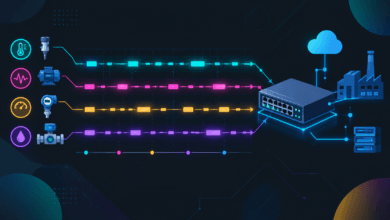
Wired connections remain the backbone of most industrial facilities, and for good reason — they’re reliable and predictable. But wiring has real limits. Moving equipment, mobile robots, and sprawling sites like mines or ports make running cable to every device impractical or outright impossible. Previous wireless options — Wi-Fi in particular — struggled to meet industrial reliability and latency requirements at scale, especially in environments full of metal structures, machinery, and electromagnetic interference.
What Makes 5G Different for Industrial Use
Ultra-Reliable Low-Latency Communication (URLLC)
One of 5G’s defined capability categories, URLLC, targets exactly the kind of deterministic, low-latency performance that industrial control applications need — latency as low as 1 millisecond with extremely high reliability guarantees. This category didn’t really exist in previous cellular generations, which optimized primarily for consumer data throughput.
Massive Machine-Type Communication (mMTC)
5G also defines a category specifically for connecting enormous numbers of low-power IoT devices within a small area — relevant for facilities deploying large numbers of sensors across a single site.
Network Slicing
5G networks can be logically divided into separate “slices,” each with its own guaranteed performance characteristics, allowing time-critical control traffic to run on one slice while general data traffic runs on another.
Private 5G Networks
Perhaps the most practically significant development for industry: organizations can now deploy private 5G networks, operating within their own facility on dedicated or licensed spectrum, giving them full control over network configuration, security, and performance.
Where 5G Is Already Making a Difference
Mobile Robotics and AGVs
Automated guided vehicles and mobile robots need reliable, low-latency wireless connectivity as they move throughout a facility. 5G’s reliability characteristics make it a stronger fit than Wi-Fi for applications where a dropped connection could mean a stalled robot or a safety issue.
Remote and Hazardous Environments
Mines, offshore platforms, and other hazardous or hard-to-wire environments benefit from 5G’s wireless flexibility, letting operators deploy sensors and control systems without extensive cabling infrastructure.
High-Bandwidth Applications
Applications like machine vision quality inspection, which generate substantial video data, benefit from 5G’s bandwidth, particularly when combined with edge computing approaches that process that data locally.
Flexible, Reconfigurable Production Lines
Facilities pursuing more flexible manufacturing layouts benefit from wireless connectivity that doesn’t require rewiring every time equipment moves.
5G vs Wi-Fi vs Wired Ethernet for Industrial Use
| Factor | Wired Ethernet | Wi-Fi | Private 5G |
|---|---|---|---|
| Reliability | Highest | Variable, interference-prone | High (URLLC-capable) |
| Mobility | None | Limited range | Wide facility coverage |
| Latency | Lowest | Variable | Very low (with URLLC) |
| Deployment flexibility | Low (requires cabling) | Moderate | High |
| Interference resistance | Not applicable | Vulnerable in industrial settings | Strong (licensed/dedicated spectrum) |
| Cost | Lower for fixed infrastructure | Lower upfront | Higher upfront, decreasing over time |
Where the Hype Outpaces Reality
Cost and Complexity of Private 5G Deployment
Setting up a private 5G network involves real infrastructure investment, spectrum considerations, and specialized expertise that most industrial organizations don’t have in-house yet.
Device Ecosystem Still Maturing
Industrial equipment with built-in 5G connectivity remains less common than equipment with Wi-Fi or wired Ethernet support, meaning many deployments currently rely on 5G gateways bridging older equipment onto the network.
Not Always Necessary
Many industrial applications work perfectly well on existing wired or Wi-Fi infrastructure, and 5G’s benefits matter most for specific use cases rather than being a universal upgrade.
Regulatory and Spectrum Variability
Private 5G spectrum availability and licensing requirements vary considerably by country, complicating any one-size-fits-all guidance.
How 5G Fits with the Broader IIoT Stack
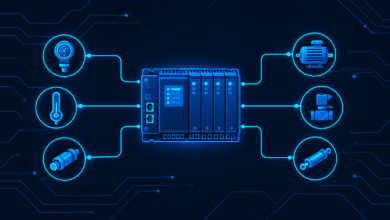
5G functions as a connectivity layer, not a replacement for the broader industrial IoT architecture. It still works alongside the PLCs, SCADA systems, and protocols like Modbus and OPC UA that handle actual control logic and data exchange. 5G simply changes how that data physically travels between devices, complementing rather than replacing edge computing architectures.
Conclusion
5G’s real value for industrial IoT lies less in raw speed and more in the reliability, low latency, and network control that URLLC, network slicing, and private deployment options bring to applications wired connections can’t serve and Wi-Fi historically struggled with. It’s not a universal replacement for existing industrial networking, but for mobile robotics, hazardous environments, and flexible production layouts, it’s solving real problems that didn’t have a good wireless answer before.
For more on the broader connectivity and automation stack 5G operates within, our guide on Industrial Automation and PLC covers the systems this connectivity layer ultimately needs to support.