
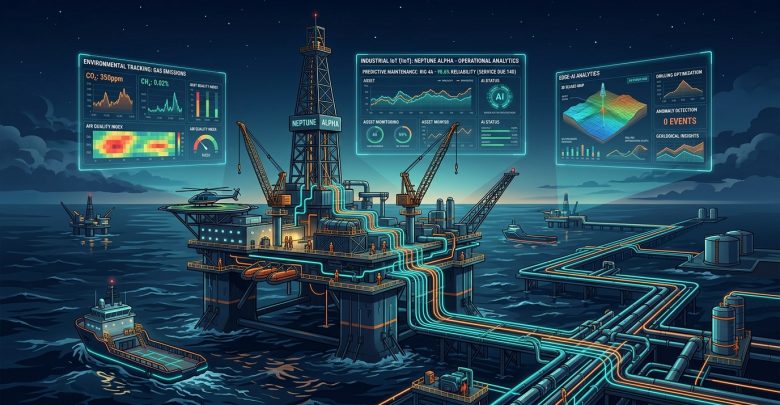
Industrial IoT (IIoT or Industry 4.0) is the future of the oil and gas industry. While the Internet of Things (IoT) has brought noticeable changes to everyday consumer life through a network of devices, sensors, and software, this specific industry has lagged behind. Today, the oil and gas industry faces major challenges, mainly due to companies’ outdated and inefficient methods of asset preservation and data collection.
Here are 5 ways IIoT will revolutionize the oil and gas industry:
1. Improved Operational Efficiency
- According to Rigzone, a reputable energy and oil website, the oil and gas industry will face losses in the coming years as Baby Boomer workers begin to retire, leaving fewer skilled individuals to fill vacant positions.
- Big data analytics and remote industrial control will help companies better manage their assets and use findings more efficiently to optimize production.
- Leveraging IIoT capabilities can reduce troubleshooting time from days to minutes, freeing up more time for other operational aspects of the business.
2. Revenue and Profitability
- This industry has a major impact on global GDP: according to a study by Oxford Economics, deploying IIoT technologies worldwide can increase GDP by 0.8% or $816 billion over the next decade.
- With global oil prices dropping, profit margins naturally shrink, meaning oil and gas companies must use this opportunity to invest in innovative technologies rather than mindlessly cutting other costs.
- Therefore, the financial gains from time savings and cost efficiencies will be highly valuable, making these industries more competitive.
3. Real-Time Data
- The concept of big data is not entirely new to the oil and gas sector, and data is specifically vital to its success. Efficiency and accuracy are more valuable in oil and gas compared to almost any other industry.
- Small improvements in efficiency can create significant economic differences, and industry profits depend on having fast and accurate data during production processes.
- With IIoT, oil production can be controlled in real-time through embedded sensors and proper communication system automation, allowing companies to gather asset data from anywhere and make informed decisions.
- For example, companies can adjust drilling strategies after comparing drilling data with data generated from neighboring wells. According to Bain & Company, this level of visibility and well monitoring can help oil and gas companies increase production by 6% to 8%.
- Furthermore, migrating to cloud-based data production systems enables companies to expand potential business transactions across the supply chain. A vital component here is a well-built IIoT platform that converts massive data volumes into actionable insights, heavily transforming pump control equipment via IoT and modern web services.
4. Reduced Safety Risks
- Safety is perhaps the industry’s biggest concern in both internal and external production processes.
- IIoT can reduce the likelihood of danger by identifying potential issues before they turn into actual problems or safety hazards.
- Remote troubleshooting means efficient and orderly adjustments at oil terminals, while an integrated IIoT system reduces travel and prevents potential hazards for workers.
5. Environmental Impact
- In addition to boosting efficiency, lowering safety risks, and reducing travel, IIoT technology can significantly decrease the environmental footprint of the oil and gas industry.
- Lower energy consumption, preventing oil leaks and other accidents, and lower carbon emissions provide strong justifications for this sector to embrace IIoT technology.
- IIoT also enables more transparent monitoring of energy and resource utilization.
Conclusion
Integrating connected devices across virtually every stage of the supply chain—from production to consumption—has a profound impact. It represents a chance for rapid transformation in an aging industry and serves as the only path for these businesses to stay relevant in today’s competitive market.
#IIoT #Industry4.0 #OilAndGas #InternetOfThings #EnergyTech #SmartIndustry #TechTrends