
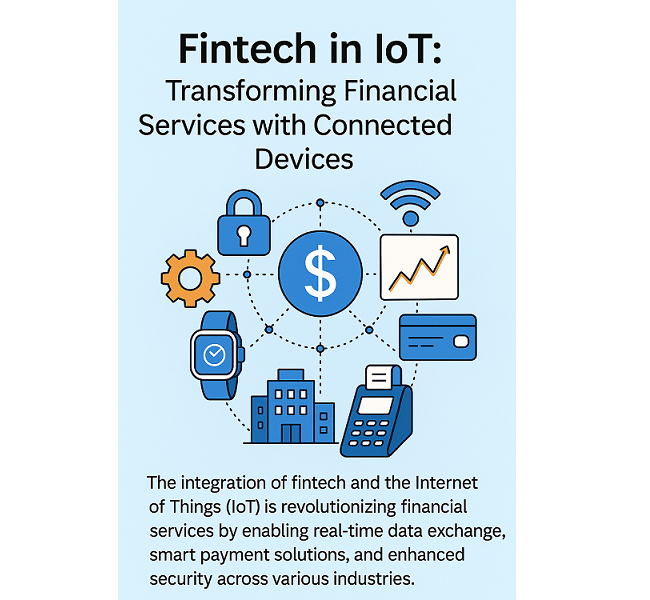
The The convergence of Financial Technology (FinTech) and the Internet of Things (IoT) is fundamentally transforming the way financial services are delivered. From automated payments to behavior-based insurance, this integration is unlocking smarter, faster, and more personalized financial experiences. By turning physical hardware into active data collectors and transaction nodes, financial institutions can shift away from rigid, legacy models toward dynamic, real-time service delivery.
🌐 What Does IoT in FinTech Mean?
At its core, IoT connects physical devices to the internet, allowing them to collect and share continuous streams of real-time data. When these devices are integrated with FinTech systems, their insights empower financial networks to act intelligently and autonomously. Financial ecosystems can now process transactions, assess risk, and release credit based on physical events occurring in the real world.
🚀 Key Industry Use Cases
1. Usage-Based Insurance (UBI) & Telematics
The insurance sector is migrating away from static demographic profiles toward active risk assessment. Telematics devices embedded in vehicles track actual driving behavior—such as acceleration rates and breaking patterns. Insurers leverage this telemetry to offer highly personalized premiums, rewarding safe behavior while significantly accelerating the claims handling process.
2. Smart & Contactless Payments
IoT continues to reduce friction in consumer retail environments. IoT-enabled wearables, smartwatches, connected home appliances, and interactive kiosks allow consumers to execute seamless, secure transactions entirely without the need for physical debit or credit cards.
3. Event-Driven Supply Chain Financing
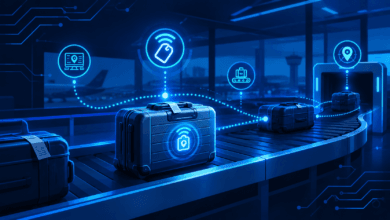
In logistics and corporate lending, embedded IoT sensors act as real-world verification checkpoints. These devices track shipment locations and verify delivery milestones in real time. Lenders can utilize this unalterable operational data to release funding, clear credit lines, or settle invoices automatically the moment hardware confirms arrival.
4. Agri-FinTech & Smart Farming
Precision agriculture relies on specialized IoT sensor grids, weather trackers, and automated crop monitors. By providing deep environmental telemetry, this data gives agricultural lenders the metrics needed for precise credit scoring, automated microloans, and dynamic, weather-indexed crop insurance policies for farmers.
5. Smart Home Insurance Ecosystems
Connected environmental sensors deployed inside smart homes can instantly detect physical hazards like water leaks, smoke, fire, or forced break-ins. The moment an anomaly is detected, claims are triggered automatically through the connected cloud network, minimizing damage, accelerating payouts, and drastically reducing fraudulent insurance claims.
🛡️ Security, Privacy & Risk Challenges
While the financial potential is immense, linking distributed hardware meshes to sensitive monetary transactions introduces critical technical risks:
- Data Privacy Concerns: Aggregating granular behavioral and lifestyle data requires ironclad data governance to protect consumer anonymity.
- Device Vulnerabilities & Cyberattacks: Low-power edge nodes often lack complex internal firewalls, making them potential entry points for large-scale network hacks or distributed denial-of-service (DDoS) campaigns.
- Complex Compliance Mandates: Architectures must be engineered to securely align with stringent global regulatory standards, including general privacy frameworks like GDPR and specialized financial guidelines like PCI-DSS.
🔮 The Horizon: What’s Next?
- IoT-Powered Micropayments: Autonomous machine-to-machine (M2M) billing setups where connected smart hardware processes fraction-of-a-cent transactions automatically for utility or digital resource consumption.
- Behavioral Credit Scoring: Risk mitigation models that move past basic credit history, factoring in real-time environmental care and operational habits when evaluating consumer creditworthiness.
- Decentralized IoT Oracles: Feeding tamper-proof, real-world physical data from field sensors straight into decentralized finance (DeFi) platforms and blockchain-driven smart contracts to automate global transactions securely.
📊 Quick Reference Architectural Matrix
| Operational Vertical | Core IoT Role | Direct FinTech Impact |
| Insurance | Telematics nodes & smart home sensors | Risk-based custom pricing, rapid automated claims |
| Retail & Commerce | Connected wearables, smart bands, & interactive kiosks | Instant contactless payments, context-aware Buy Now Pay Later (BNPL) |
| Agriculture | Environmental soil nodes & crop health trackers | Smarter farm loans, automated dynamic micro-insurance |
| Logistics | Real-time shipment & cold-chain asset tracking | Event-driven supply chain financing, transparent asset capital |
Tags:
IoT FinTech | Smart Payments | Telematics Insurance | Agri Fintech | Supply Chain Finance | Connected Devices | Contactless Transactions | Data Security | Blockchain Oracles