
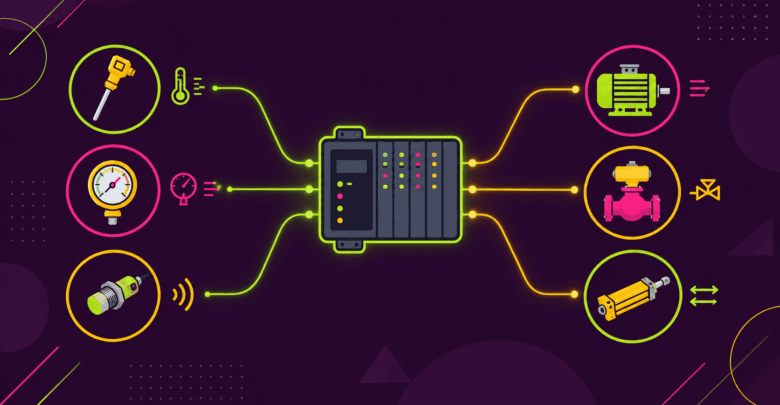
Every industrial IoT system starts at the same place: the physical world. Before any analytics, dashboards, or cloud platforms come into play, something has to measure what’s happening and something has to act on it. Sensors do the measuring. Actuators do the acting. Together, they form the foundation that every other layer depends on.
This guide covers the main types of industrial sensors and actuators, how they connect to control systems, and how to choose the right ones for a project.
What Are Sensors and Actuators?
A sensor converts a physical condition into an electrical signal. Temperature, pressure, flow, vibration, and position are common examples. An actuator does the opposite. It converts an electrical signal into physical action, such as opening a valve, spinning a motor, or moving a cylinder.
In a control loop, the two work as a pair. The sensor reports the current state. The controller, usually a PLC, compares it with a target. Then the actuator makes the correction.
Common Types of Industrial Sensors
Temperature Sensors
Thermocouples and resistance temperature detectors (RTDs) dominate industrial settings. Thermocouples handle extreme temperatures and respond quickly. RTDs, on the other hand, offer higher accuracy and stability over time.
Pressure Sensors
These measure the force of gases or liquids in pipes, tanks, and hydraulic systems. Engineers use them to monitor safety limits and to keep processes stable.
Flow Sensors
Flow sensors track how much liquid or gas moves through a pipe. Different technologies suit different fluids, so the choice depends on what the process actually carries.
Level Sensors
Level sensors report how full a tank or silo is. Ultrasonic, radar, and float-based designs are all common.
Proximity and Position Sensors
These detect whether an object is present or where it sits. Inductive, capacitive, and optical types each fit different materials and distances.
Vibration and Acoustic Sensors
Rotating equipment produces telltale vibration patterns as it wears. Consequently, these sensors are the backbone of predictive maintenance, which we explore in our IoT aircraft maintenance guide.
Vision Sensors and Cameras
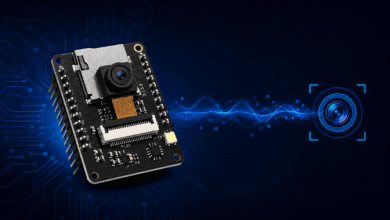
Cameras inspect products, read codes, and guide robots. They generate large amounts of data, so many systems process the images locally using edge computing.
Gas and Environmental Sensors
These monitor air quality, humidity, and hazardous gases. They protect both workers and equipment.
Common Types of Industrial Actuators
Electric Motors
Motors drive conveyors, pumps, fans, and countless other machines. Variable-speed drives let controllers adjust speed precisely.
Solenoid Valves
These valves open or close quickly in response to an electrical signal. They control the flow of air, water, and other fluids.
Pneumatic Actuators
Compressed air drives these actuators. They deliver fast, powerful motion and suit many clamping and pushing tasks.
Hydraulic Actuators
Pressurized fluid powers these actuators. They produce very high force, which makes them ideal for heavy machinery.
Servo and Stepper Systems
These provide precise control over position and speed. Robots and CNC machines depend on them.
Relays and Contactors
These switch higher-power circuits on and off. In many systems, they sit between the PLC’s low-power outputs and a large motor.
How Sensors and Actuators Connect to Control Systems
Analog Signals
Many sensors still output a simple analog signal, often a current loop such as 4–20 mA. This approach is robust and noise-resistant. It also works well over long cable runs.
Digital Signals
Simple devices, like limit switches, report on or off states. The PLC reads these as digital inputs.
Fieldbus and Industrial Ethernet
Smarter devices communicate digitally using protocols like Modbus. This lets a single cable carry multiple readings, along with diagnostic information.
IO-Link and Smart Devices
Modern smart sensors report more than a single value. They also share health status, configuration, and diagnostics. As a result, maintenance teams can spot problems earlier.
Wireless Sensors
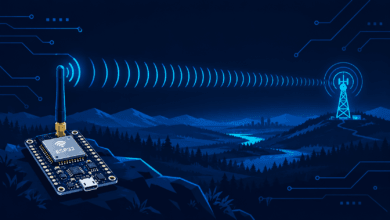
Where cabling is impractical, wireless sensors fill the gap. Battery-powered devices, in particular, make it easy to monitor equipment that was previously hard to reach. For demanding applications, private 5G offers another wireless option.
How IIoT Changes the Picture
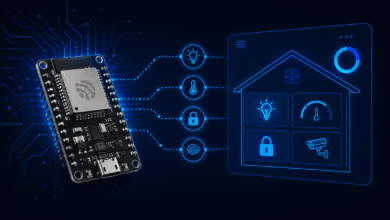
Traditional systems used sensors mainly for local control. IIoT, however, treats every sensor reading as potentially valuable data. Teams now collect, store, and analyze readings that previously disappeared the moment the control loop used them.
This shift enables trend analysis, anomaly detection, and digital twin models built on real operational data. It also raises new questions about data quality, security, and who owns the information.
How to Choose the Right Sensor
- Define what you need to measure. Start with the physical quantity and the range you expect.
- Check the environment. Heat, moisture, dust, vibration, and chemicals all affect sensor life.
- Consider accuracy and response time. Faster, more accurate sensors usually cost more, so match them to the real requirement.
- Plan the connection. Make sure the output type matches your controller or gateway.
- Think about maintenance. Calibration needs and replacement effort affect long-term cost.
- Look at the data you want later. A smart sensor that costs slightly more today may unlock analytics tomorrow.
Common Mistakes to Avoid
Choosing on Price Alone
A cheap sensor that drifts or fails early costs far more in downtime than it saves upfront.
Ignoring Calibration
Even good sensors drift over time. Therefore, plan regular calibration, especially for safety-critical measurements.
Overlooking the Environment
A sensor rated for a clean lab may fail quickly on a dusty, hot factory floor.
Collecting Data Without a Purpose
More data isn’t always better. Decide what questions you want to answer before adding hundreds of sensors.
Forgetting Security
Networked sensors can become entry points for attackers. This echoes the broader OT vs IT security challenges across industrial systems.
Conclusion
Sensors and actuators are the quiet foundation of every industrial IoT project. Sensors give the system eyes. Actuators give it hands. Choosing them carefully, with the environment, accuracy, and data needs in mind, saves money and headaches later. As smart devices spread, these humble components keep growing more capable, turning ordinary machines into rich sources of insight.
For a closer look at the controllers that read these signals, see our guide on Industrial Automation and PLC.