

Smart motion sensors serve as a fundamental building block for modern home security, automated lighting, and climate control. Designed to detect physical movement within indoor and outdoor spaces, these wireless IoT edge devices provide real-time alerts and trigger automated workflows across connected home devices.
Consequently, integrating motion sensors into smart home platforms converts passive living spaces into proactive, responsive environments.
1. What Is a Smart Motion Sensor?
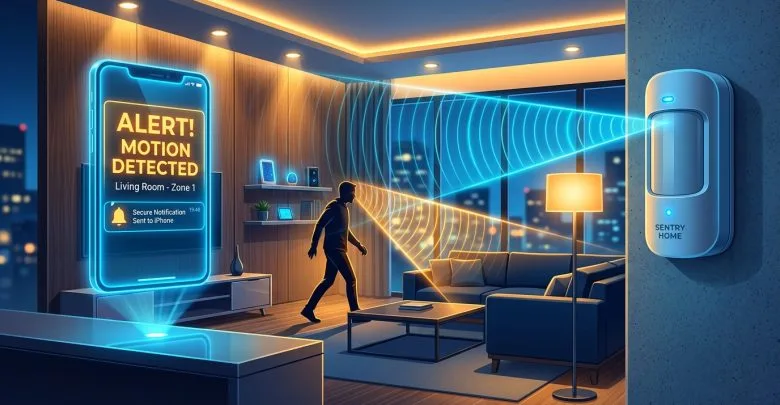
A smart motion sensor is a wireless electronic component that monitors designated physical areas—such as entryways, hallways, backyards, and perimeter walls—for movement:
- Coverage Customization: Users can define specific detection zones to prevent false alarms caused by pets or passing outdoor traffic.
- Instant Notifications: When unexpected movement occurs, the sensor instantly issues push notifications to smartphones, activates local sirens, or triggers security video recording.
2. IoT Ecosystem Integration and Automation
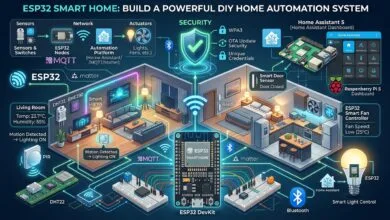
Smart motion sensors do not operate in isolation; rather, they communicate across home automation hubs via wireless protocols like Zigbee, Z-Wave, Wi-Fi, or Thread:
- Smart Lighting Control: Automatically illuminates hallways, stairwells, or dark outdoor pathways when motion is detected, serving as both a convenience feature and an intruder deterrent.
- Surveillance Triggering: Signals nearby smart cameras to start recording or pan toward the exact zone of detected movement.
- Climate and Energy Optimization: Detects room occupancy to adjust smart thermostats or turn off HVAC units when areas remain vacant, reducing household energy consumption.
Key Features and Motion Detection Technologies
The table below outlines the core features and underlying sensing technologies used in modern smart motion sensors:
| Sensing Technology / Feature | Operational Mechanism | Primary Smart Home Advantage |
|---|---|---|
| Passive Infrared (PIR) | Detects changes in thermal radiation and heat movement | Low power consumption; ideal for battery-operated indoor sensors |
| Microwave / Ultrasonic | Emits high-frequency waves to measure reflections and doppler shifts | Highly sensitive; penetrates thin barriers and covers wide outdoor areas |
| Wireless Battery Operation | Runs on long-lasting coin cells or lithium batteries | Enables flexible wall or ceiling mounting without complex wiring |
| Instant Cloud Alerts | Connects to IoT gateways via mobile apps | Sends immediate security alerts to users anywhere in the world |
Conclusion
In conclusion, smart motion sensors provide an efficient bridge between home security and automated energy management. Ultimately, pairing motion sensing technology with connected IoT ecosystems creates safer, more energy-efficient smart homes.