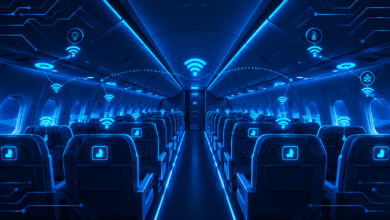

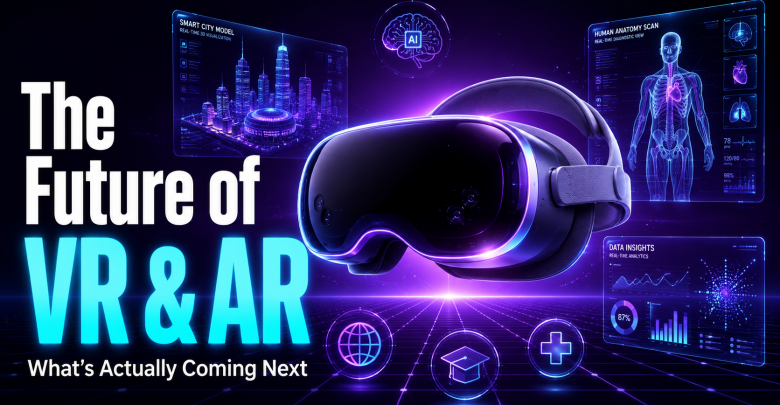
The boundary between the physical and digital worlds continues to blur. Modern XR technology is steadily evolving toward an omnipresent spatial computing ecosystem.
As hardware becomes lighter and more deeply integrated with smart device sensors, these tools are transitioning into indispensable productivity assets.
The Convergence of IoT, AR, and VR (The Immersive Web)
The true power of modern XR lies in its seamless integration with the Internet of Things. Instead of interacting with IoT data through flat dashboards, engineers and consumers now use immersive headsets to visualize metrics in real time.
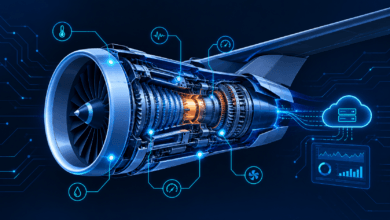
- Digital Twins: Industrial operators can wear AR smart glasses to inspect heavy machinery. Consequently, they see floating diagnostic metrics, thermal logs, and live telemetry streamed directly from physical IoT sensors.
- Remote Smart Home Control: Users can interact with virtual interfaces superimposed onto their physical environment. Furthermore, they can control connected automation devices using simple hand gestures.
Enterprise and Industrial Training Revolution
The corporate sector is driving massive adoption of virtual environments. Consequently, enterprises are moving away from traditional manuals toward risk-free simulations.
- Hazardous Environments: Flight simulators, surgical procedures, and heavy-equipment practice take place safely in VR. Therefore, companies drastically reduce training costs and human error.
- Collaborative Design: Global teams of architects and engineers can step into a shared virtual space. As a result, they collaborate on full-scale 3D models before physical manufacturing begins.
Hardware Advancements: Overcoming Early Friction
Early adoption suffered from heavy headsets, motion sickness, and tethered cables. However, modern trends are systematically solving these roadblocks through key technological innovations.
- Standalone Processing & Wireless Freedom: Advanced mobile chipsets enable high-end spatial computing directly inside wireless, lightweight headsets.
- Pass-Through Technology: High-resolution cameras blend virtual elements with the physical environment. Consequently, hardware smoothly transitions from pure VR to sophisticated Mixed Reality (MR).
- Eye and Hand Tracking: Natural user interfaces are replacing plastic controllers. Indeed, infrared sensors track the user’s gaze and fine hand movements accurately.
Spatial Commerce and the Future of Retail
Immersive technologies are rewriting the rules of the consumer shopping experience. For instance, brands leverage AR to bridge the gap between online browsing and physical reality.
Consumers can place virtual furniture accurately within their living rooms to check dimensions before buying. Similarly, they can digitally try on clothing or cosmetics via smart mirrors. Ultimately, this interactive approach enhances customer confidence while noticeably reducing product return rates.
Watch the Full Video Breakdown
Watch our full video breakdown on YouTube to learn more about the future of Spatial Computing and IoT visualization:
📺 Watch here: Spatial Computing & IoT Visualization on YouTube
Conclusion
As these hardware platforms become lighter, more affordable, and deeply integrated with local network gateways, they will transform daily productivity. Spatial computing is no longer just an entertainment novelty; it is the future of industrial interaction.